


Night cap with Adíos, Adíos, Adíos
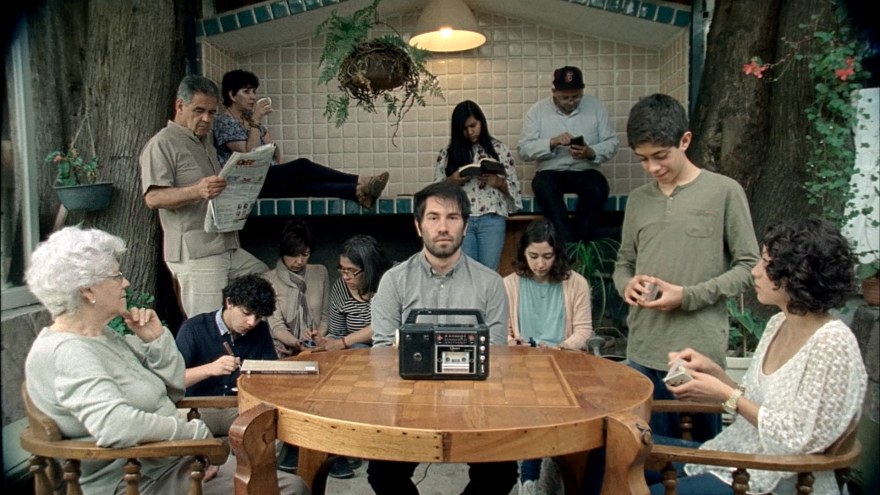
Interview with Ricardo Castro, director of Adíos, Adíos, Adíos
 Adíos, Adíos, Adíos deals with family, memories and grief. Do you think that art can help the artist or the viewer deal with absence and help with the grieving process?
Well, in my case making this film changed my life. I was in complete denial about my mother’s death, and because I wrote, directed, edited, and also composed the score to this documentary on my own, I ended up spending a complete year looking at every single picture and video we have together, reading letters, thinking, meditating, and actually living the whole cathartic process of facing death. It was my own therapy and it worked to get in touch with every feeling that was buried in me for four years, which I was so afraid of facing. On the other hand, it was also cathartic for my family too. We had been separated since my mother’s death and this film inspired them to be at peace with each other and start hanging again, so they didn’t lose the love and unity they all had. They decided to honour her death by honouring life. So yeah I think that art can absolutely help, especially when it’s done from the bottom of the heart, because people empathize immediately with it.
What do you hope the audience will get out of it?
Adiós, Adiós, Adiós is a love letter to my mom. It celebrates life and deals with grief in an unusual way. So in preview screenings of the film, something amazing happened. People feel so connected with those three things that they end up with the need to actually speak about their own grief or families. It’s a very intimate picture of myself, and I think that by undressing this personal experience, the audience feels confident enough to do the same thing with their own stories. So I’ve had people standing up at the screening and talk about their grief in front of everyone, or write to me afterwards, or approach me after the screening to open up about themselves. And I’m no psychologist (laughs) so I just listen and thank them. But if this film can trigger these feelings in people and the courage to talk about their own losses, there’s nothing more I could ask for.
Can you tell us a bit about you as a filmmaker and your ambitions for the future?
I’m currently writing two feature films backed up by really cool studios in Mexico. I’m also developing two series that will be produced on 2021, so right now I’m putting my complete heart and time on it.
Would you say that the short film format has given you any particular freedom?
I wouldn’t say freedom… I would say the short film format taught me to let go of the material. It’s the perfect training to cut scenes you’re in love with, in order for the film to work out on its own… And not be guided by personal choices. Because for a director, every film is his own body. So if it’s already difficult to chop a part of your body, when making an autobiography, it’s way worse. Every memory or story or feeling you cut out of a personal film, it’s an arm, a leg, or an organ. So I think for directors, learning how to be a servant for the film itself is one of the most difficult things to learn. And trying to cram 26 years of my life into 30 minutes was definitely the best training as a filmmaker.
What do you consider your cinematographic references?
For this film I was inspired by the amazing documentary short film Ilha das Flores (Isle of Flowers) by Jorge Furtado, by Martin De Thurah’s work and atmospheres, by Sherman’s March by Ross McElwee, Wes Anderson, and by one of my favorite Mexican documentaries Los Ojos del Mar by José Álvarez.
Adíos, Adíos, Adíos is part of International Competition I13.