


Dîner avec Des millions de larmes
Interview with Natalie Beder, director of Des millions de larmes [Millions of Tears]
 How did you come up with the idea for Des millions de larmes?
Before starting on the film, I had already begun work on the script for a feature film that looked at grief and family bonds. As I was moving along in the writing process, my agent, Brigitte Descormiers, suggested I write a short film before going full steam into a feature-length film. So I wanted to keep working on those two ideas, but starting from scratch so I wouldn’t just write a “short feature film”, and exploit the freedom the format affords.
When I began writing, the idea was to focus on the family relationship, the father-daughter relationship in the film. I was interested in working on a relationship that “comes into being”, rather than a pre-existing bond. My starting point was an encounter between a man and woman in some anonymous place. I tried exploring various possibilities, the roads leading to that encounter, before having my two characters follow the path that I wanted them to follow from the beginning.
Do you think distress [le chagrin] is quantifiable?
« He was hurt somewhere, without knowing where; somewhere within him there was a pin-point of pain – one of those almost imperceptible wounds which we cannot lay a finger on, but which incommode us, tire us, depress us, irritate us – a slight and occultpang, as it were a small seed of distress ». The word “distress” always reminds me of this sentence from Maupassant. [Pierre and Jean, 1887 – Editor’s note]
No, I don’t think you can quantify it. I think it’s like a low-pressure area in meteorology. It overwhelms us and buries us, then subsides, and all that’s left is just that: a “small seed of distress”.
When you were working on the film, did you consult Dr. Elizabeth Kübler-Ross’s work on the different “stages of grief”?
No. I’d heard about the work, but I did not use it.
Though she is quite young, the female character is very independent and determined. Her journey seems to have a goal. How did you develop the character? Did you conduct research on young women who’ve undertaken similar journeys in real life?
The female character springs largely from my desire to act, my dream of having a character to play – she’s a little crude, impolite, nothing embarasses her, she’d head off on her way with only the bare essentials. By necessity. Because it’s no longer possible for her to remain where she’s coming from. She’s a chracter who needs to pull herself up by the roots and replant herself somewhere else to reach her potential. She’s looking for greater freedom.
The character, who is freeing herself both spiritually and geographically, seems to have broken off ties with her family. Was your intention to show that excessive emancipation can lead to breaking off ties, or that emancipation can lead to breaking free of those ties?
I was more interested in looking at the positive aspects of breaking free (although it’s not clear that she is free…), but yeah, the need to break free in order to be whole.
.

.
How did you work on the stages in their journey to get to know each other: first encounter, acceptance, mistrust?
When I was writing, it happened a lot in alternating between formal and informal forms of address. I also imagined their bodies in space, sometimes having a car divide them, sometimes showing them together in the same bed, and so on. I wanted to look at the impact space has – the distancing and nearing of their bodies threaded through their words. A lot of it comes through in the acting, their glances and silences.
Did you write the film the way it is, or did you consider it a part of a larger whole, with a “before” the meeting that opens the film, and maybe an “after” following their separation?
No, what I was interested in was to taking the story up in middle. That’s how I wrote it. I didn’t write any scenes before or after. That’s the space that I want to leave for the viewer.
Des millions de larmes looks at failure and one’s consequent relationship to guilt. Why did that emotion interest you?
What really interested me was the impossibility of communication, the feeling of always being “beside” other people. The contradiction between the need to be with people and the impossibility of being with them, and how hard it is to detach yourself from a bond, to take step back in order to really see the other.
Do you think short films are effective in questioning the meaning of family and of « macro » social units?
I see short films as an independent cinematic genre, like short stories and novels in literature. Yes, I think you can very much ask those types of questions, but a million other questions too, don’t you think?
Des millions de larmes was either produced, co-produced or self-financed with French funds. Did you write the film with this “French” aspect in mind: making movie references, building a specific context (in a particular region, for example) or inserting characteristically French notions?
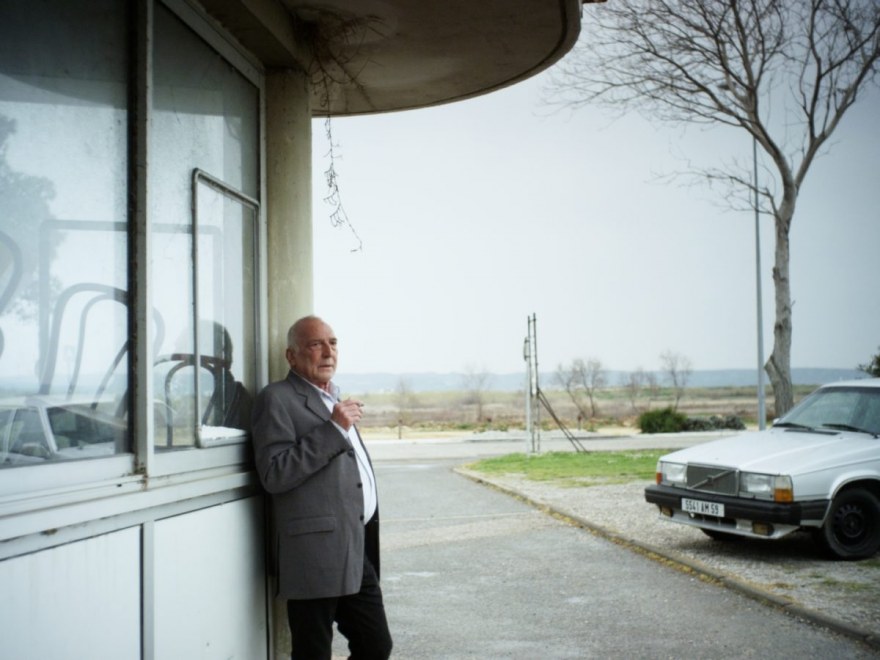
My biggest concern was shooting in an unidentifiable place. I thought I’d be able to find that sort of anonymity in the south-east of France, in some remote corner of the Camargue. I got very lucky because the region helped us out. I would have had to rethink things if they hadn’t agreed.
Viewers often ask me if the story takes place in Picardy, in the far north of France. I really like that idea. I got a lot of inspiration from certain photographers like William Eggleston, Saul Leiter, Marion Dubier Clark, Dolores Marat…
.
Des millions de larmes is being shown in National Competition F10.
Viewers at the F10 screening at the cinema Le Rio at 2pm on Tuesday, February 9 will be able to talk with the director immediately following the showing.
Further information:
Des millions de larmes won the “Coup de coeur” prize at the Combat International Short Film Festival, the “Prix du public” and the second Jury Prize at the Alcine Festival in Madrid, and the Jury Prize at the Paris Courts Devant Festival.