


Breakfast with Ma manman d’lo
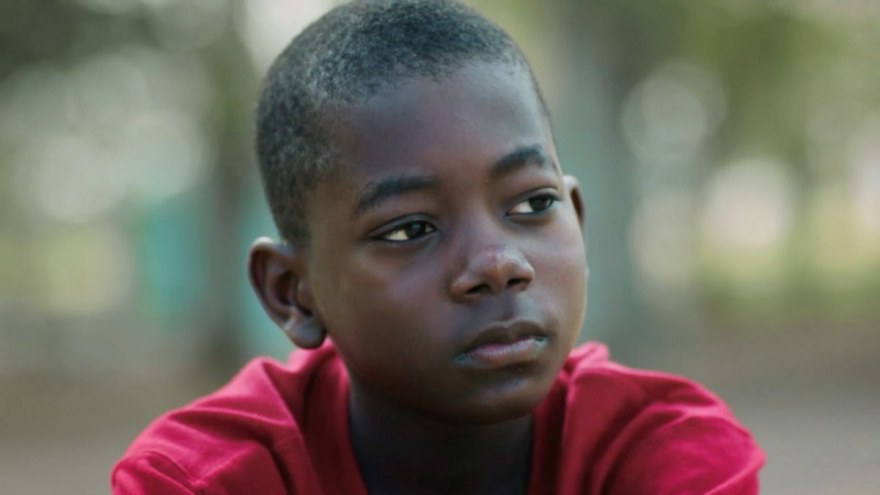
An interview with Julien Silloray, directeur of Ma manman d’lo [My Mommy of the Water]
 You made Ma manman d’lo in Guadeloupe. Last year you made Un toit pour mes vieux os [A Roof for My Old Bones] in Guadeloupe as well (The film was selected for the National Competition at the Clermont-Ferrand Short Film Festival in 2014, where it won the France Télévisions prize.). How did your affection for the country develop?
My parents took me there when I was six. I had all of my schooling there, right up through the end of high school. Even though they are also of mixed heritage, the culture and traditions of Guadeloupe were different from those of my parents, and I grew up in that mix; my ideas were fed from both worlds. I feel like a native of both France and Guadeloupe, and even today it seems natural to me to write stories in Guadeloupe.
Is the Guadeloupe that you describe faithful to contemporary reality, or is it already an image of another time, perhaps of your childhood? Have there been many changes due to the developments in new technologies?
The reality in Guadeloupe is varied, as with any culture, and it is undergoing the same globalization as the rest of the world. The country is changing, and if I were to be reductive, I’d say that on one side you have the city and young people who’ve grown up with the conspicuous consumption of imported goods; on the other side, you have the countryside and what is left of its popular culture, its beliefs, myths and magic which are still part of Guadeloupe’s collective unconscious. But how long will that last? I plumbed the mind of the latter Guadeloupe for the inspiration for my two first short films. All the same though, when I was doing the casting for Ma manman d’lo I noticed that the children I met, who were all from the countryside, were more familiar with the fantastic figures of the big American studios than the ones from their village. I would say that it’s less a question of technological development than it is one of cultural influence. For administrative reasons, but also due to economic ties and the cultural model, Guadeloupe and Martinique often seem closer to Europe and the United States than to their Caribbean and South American neighbors. The question of the identity of the West Indies within the Caribbean basin has been debated for decades and has still not been resolved.
Do you know if there are many films made in Guadeloupe? And are they more representative of local peculiarities than ones made in France?
The number of films made in Guadeloupe is miniscule compared to French production. Feature films are rare, or they’re made on a shoestring budget and have no real distribution outlets. The bulk of the audiovisual economy is based on television, institutional films and executive producing English and French series.
Film is beginning to enter the cultural habits of young West Indians. There are more and more who see themselves studying film and making a career out of it. (For my generation – I graduated high school in 2000 – film was a more marginal consideration. I did not pursue film studies.) There are more and more theaters and film festivals; since 2008, the country has also benefitted from the same regional assistance as the other regions of France, and short film production is on the rise. My understanding is incomplete, however, since I live in Paris, and those short films are rarely shown in France. I’m not in the best position to see them. Judging from the ones I have been able to see, however, I get the feeling they are very much beginner films that deal mainly with the question of identity, and their scripts and aesthetics are heavily influenced by television and American films. What’s still missing are cinematic narration and variety in the storytelling. The West Indies are full of great writers and musicians because there is a literary and musical tradition in the islands. But for the moment, there is only one filmmaker, Euzhan Palcy from Martinique, a genius who made Sugar Cane Alley when he was twenty-four. That film won the Silver Lion for Best Debut Film at the Venice Film Festival in 1983.
Have Guadeloupean films found their identity? And if so, what would that be?
That’s what’s at stake for the future. It’s undeniable that the technical and aesthetic competency of films today is richer.
Ma manman d’lo is a French production. In your opinion, what does the French film industry offer that others don’t, as far as short films are concerned?
Like many other people, I’ve noticed that the system of financing short films in France allows these films to continue to be a vast independent field of experimentation. Most short films do have a “French” stamp in the way they’re told and shot, but when I meet young foreign filmmakers, I have the feeling of being freer, of being part of a privileged system. When I think of the quality and success of two films as different as Jean-Baptiste Saurel’s La Bifle and Fraco Lolli’s Rodri (even if both filmmakers are from the same school), I think there really is space for diversity in short films.
Before I made my first film, I had no film experience: I hadn’t gone to film school and I hadn’t made a successful self-produced film, and all the same both the National Film Center and the television stations gave me a chance. I had a good story, they liked my script and I got enough financing to shoot the film in comfortable conditions. Even if I was talking about a world and about characters that were different from what is generally produced in France.
Your hero, Rosental, is an eight-year-old child. How did you come up with the idea of making a film about a child?
I had a number of things in mind. The image of a drowned mother, who turns into a siren (the West Indian manman d’lo) who comes back looking for her son. That image kept coming back to me, I don’t know why. That was mixed with a song from Guadeloupe from the 1980s where a young girl sings with her dead mother and asks her why she left. I am always moved by this particular expression of the relation that West Indians have with death, which is traditionally evoked by communication that is maintained between the two worlds. Without actually developing the theme of “death in the West Indies”, I wanted to tell the story of this song in my way, following a little boy who must learn to mourn. But from a Guadeloupean point of view. His direction is basically the same as that of a little European, but if the manman d’lo obviously represents death, there are different ways of interpreting the meaning of the boy’s mourning based on a European or West Indian perspective. It depends on the viewer and his or her culture.
How did you go about casting your actors, and in particular Rosental?
I take charge of the castings for my films, using “open casting calls”. For Rosental, I went looking for him outside the schools around Port-Louis, the city where we filmed. I did not see many children who fit the role. Rosental (that’s the boy’s real name) had a different story than the other children. He was a difficult child with a peculiar sensitivity that is linked to his Haitian origins and his family history, which made him the town mascot. It’s always difficult shooting with children, but generally speaking everything went well.
At the heart of your film you’ve placed another character, Kamo, the village sorcerer. Do you think the magical dimension lends the film an added flavor of Guadeloupe, or more of a comic effect?
Magic fascinates me. I’ve heard crazy tales and seen strange things. Magic implies a relationship to the world that probes me. In my previous two films, it seemed an obvious element in the dialectic of problems that my characters had to deal with, because it still holds an important place in the West Indian imagination. Kamo does have a lighter side and you can choose not to believe in his powers. But Rosental believes in them and latches onto them because, at his age and in other circumstances, I did the same thing. And anyway, we have to beware of our preconceptions. Kamo is a bit manipulative and eccentric, like some of his colleagues, but in the end, it is surely he who brings manman d’lo back. You’d be surprised at the breadth of his abilities…
In France, 2.4 million children are raised by single mothers (which represents 15% of families), while only 420,000 are raised by single fathers (or 2.5% of families). Why did you choose to place your hero in this non-traditional situation?
In Guadeloupe, the traditional model is that the mother raises her children by herself. If the mother is absent or wanting, the grandmother steps in, not the father. I had originally written the script according to the traditional model, and Rosental lived with his grandmother. But as we were doing the casting, I suddenly didn’t like that anymore. I found the relationship too treacly, too childish, and I did not want to make a harmless tale for children. Pierre Valcry is a friend and I thought of him for the father as I imagined a more modern version of the film, one that was further from cliché, more in touch with the evolution of family behavior. And also, I’m more personally affected by the father-son relationship, the father’s communication and reserved emotion, the idea that they finally find each other at the end of the film.
And lastly, how did you construct Rosental’s grief over the absence of his mother: did that come from lived experience, from research, from accounts, or is it purely imagined?
I did not experience this type of mourning as a child. I read books, theses on the topic. I talked to West Indian friends who had lost one of their parents when they were children, in order to better understand their frame of mind at the time, to see if their approach to mourning was different than that of a European child. That was not always the case.
I don’t know if I’ve faithful to the most common realities. I didn’t want to make Rosental a weeping character, I didn’t want pathos, but rather a sober sadness and melancholy. To be closer to the perception of death in the West Indies, which is both commonplace (in Guadeloupe you hear obituaries every day on the radio) and tragic, of course, but accompanied by a host of rituals that appear festive. The tone regarding death strikes me as different in Guadeloupe, more nuanced than in Europe.
Programme for viewing Ma manman d’lo: National Competition F10.