


Lunch with 16 de Decembro [16th December]
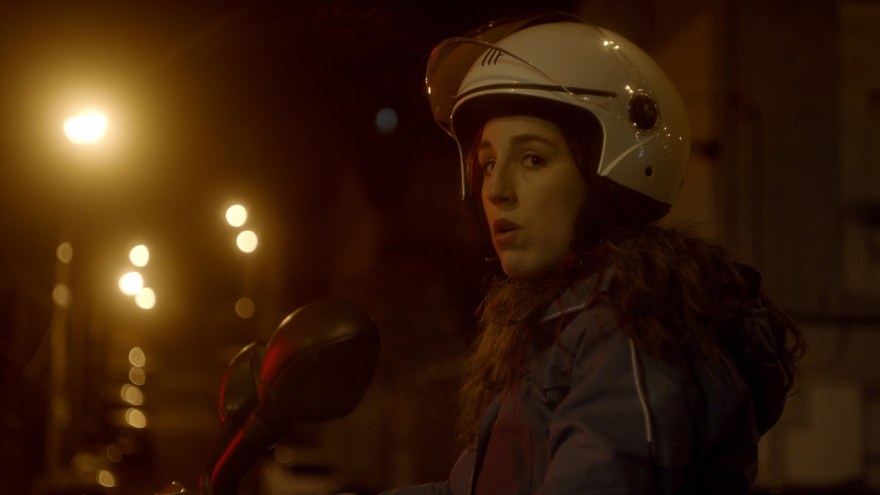
Interview with Álvaro Gago Diaz, director of 16 de Decembro [16th December]
 Your short Matria won the Grand Jury Prize at Sundance. Congratulations! What has been the impact of that success on your career and filmmaking so far?
It has definitely had a positive impact. People in general are more open or more willing to spend their time listening to my ideas. However, I do need to battle through and work hard to bring them to the screen. I wouldn’t like it to be otherwise though, the beauty of the process lies in the work. I guess the impact hasn’t been greater because of the choices I made. After Sundance I could have moved to L.A. and work there but I’ve always been clear that if I were to be involved in cinema it would be from a local perspective (Galicia, in the north-west of Spain, is what I know best and is what I feel I’m allowed to film) and in projects, my own or others, with soul and with a certain ethical code behind their production. Maybe the impact of moving to the U.S. would have been greater but not necessarily positive. I don’t know. I don’t spend too much time thinking about it.
The film depicts the ordinariness of violence. Can you tell us a bit about this aspect of your film?
The expression “the ordinariness of violence” defines the film quite well. It’s Lucía’s story but the focus is divided between her and the mirror that is trying to show us the banality of that violence, generated by seemingly innocuous macho attitudes, which finds its seed in the misperception of its very meaning and its implications. A violence that has always found shelter in a society that, to date, has done little to eradicate it. We need to rethink, from a gender perspective, some of the ways in which we relate to each other, and we need to do that through education.
Your film brilliantly shows how women deal with that violence by keeping silent. What made you decide to deal with this fundamental aspect of violence against women?
I don’t necessarily agree with that statement, but I understand that you thought that Lucía was going to keep silent. However, other people I’ve talked to thought otherwise. All the possibilities are there. We did leave an open ending on purpose, because after all, it doesn’t matter what she does: it’s OK if she decides to go to the police, keep silent or go back to Ruth and tell her about it. We cannot focus our attention on the consequences and judge her choices. What we need to focus on is what happens inside that car. The question cannot be: “why didn’t you go to the police?” but rather: “what prompted those guys to do what they did and what can we do about it?” In my case, making a film appeared as the most efficient way to contribute and be part of a fight in which I firmly believe.
What sort of freedom would you say the short format allows?
The freedom that comes when you don’t mind taking risks and you don’t have an ego to protect.
What do you consider your cinematographic references?
Cinema found me late in life. I was already twenty when I started watching the Italian neorealists. I remember falling in love with those films and I always come back to them. I then went on to live in the U.K. for eight years and watched a lot of British cinema that definitely shaped my view: Ken Loach, Andrea Arnold, Lindsay Anderson, Lynne Ramsey. Lastly, I often find myself revisiting the work of the Dardenne Brothers, Bertrand Tavernier, Xavier Legrand (who I believe won Clermont-Ferrand), Abbas Kiarostami, Ermano Olmi, Valeska Grisebach, Jonas Carpignano, Joao Salaviza or Gabriela Pitcher, to name a few.
16 de Decembro [16th December] is part of International Competition I6.