


Enter your email Address

Fest_25_carre_retina
Make a donation Press
Fest_25_new_retina
  • La Jetée

    Clermont-Ferrand

    • Documentation Center
    • Regular Events
    • Short film screenings
    • Training
    • Seminars
    • All Shorts
  • Short Film 31 JAN. > 8 FEB.

    Festival

    • Participate
      • Overview
      • Submit a film
      • Become a volunteer
      • Student Juries
      • Survival guide for newcomers
      • Professionals
      • Ticket Office
    • Discover more
      • Catalogues
      • Festival Newsletter
      • Prizes 2024
      • Le Trombino
      • Code of conduct
      • Our commitments
      • La Brasserie du court
    • Useful information
      • Coming to Clermont-Ferrand
      • Accomodation
      • Restaurants
      • Festival Locations
    • Archives
  • Short Film 3 > 6 FEB.

    Market

    • Overview
    • MEDIA Rendez-vous
    • Euro Connection
    • Shortfilmwire+
    • Participate
      • On site
      • Remotely
    • Pro Reception Desk
    • Prepare my visit
  • Short Film

    Circulation
    • Circuit Court
    • Screen festival programs
    • Plein Champ Network
    • Shortfilmdepot
  • Short Cuts

    Professionnalisation

    • Residences
    • Training
    • Support
    • Workshops
  • Education and

    Training
    • Upcoming events
    • Actions
      • Young audience screenings
      • Educational workshops
      • Anatomies
      • L’Atelier
      • Young critics competition
        • Young critics competition 2018
        • Young critics competition 2017
      • Ciné en herbe
    • Devices
      • Culture at the hospital
      • Culture in prison
      • Kindergarten at the cinema
      • High school at the cinema
      • Cinema sections
    • Training
      • Short Film Festival
      • Teaching cinema
      • School and cinema
      • Middle school at the cinema
      • High school at the cinema
      • Cinema sections
      • PREAC cinema
      • MIRE / ESPE
    • Resources
      • Educational tools
      • Transmission impossible
      • Le fil des images
      • Transmettre le cinéma
      • Ressources by film
      • Côté Court – LDVTV
        • Côté Court 2019
        • Côté Court 2018
        • Vu en court 2017
        • Vu en court 2016
        • Vu en court 2015
        • Vu en court 2014
        • Vu en court 2013
        • Vu en court 2012
  • Our newsletters
  • News
  • Archives
  • About us
  • Team
  • Partners
  • Advertisement

© Sauve qui peut le court métrage

Legal Mentions | Privacy

  • FR
  • EN
  • Tea time with Interiør
    19 February 2019
    Festival, Meeting with…
    By Abla Kandalaft
    • interior-4-rvb


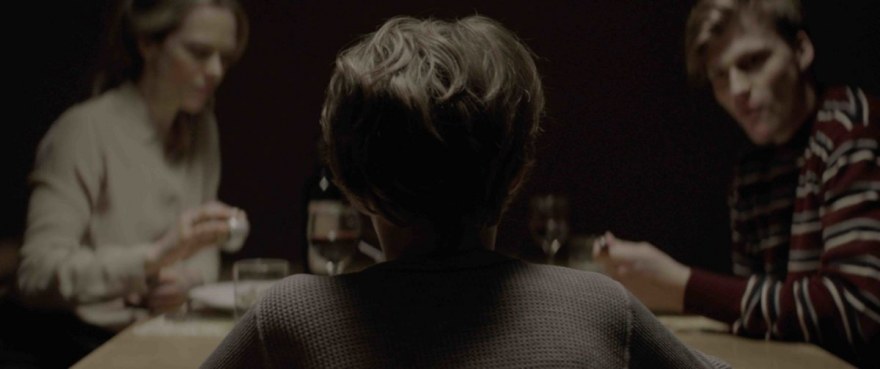
    An interview with Reed Van Dyk, director of Interiør

    la mouche cf Why did you choose this particular title?
    I wish I knew. As with all creative decisions, it’s mostly a gut response, an instinct thing. I could offer some intellectual justification for the title, but that would be a bore. Can’t even remember when the idea came to me. It has been the name since the beginning though. I toyed with a few others options after post-production, but “Interior” stuck. Probably because of its spaciousness as a word and as a title. It can mean a lot of different things.

    la mouche cf Set within the confines of a building, the film feels claustrophobic and dark. Can you tell us about your use of light and darkness to convey the relationship between the son and mother?
    I can’t fully account for what Greta Zozula (my cinematographer) and I were up to with the lighting, as these “decisions” are generally made outside of conscious view. I had a general vision for the film’s lighting at the start though, which she and I sharpened on a scene-to-scene basis. Looking at the film now, I can see that the pretense of a “normal” life or relationship between mother and son is kept up (but barely) during the daylight scenes, and then unravels at night, when each of their deprivation and longing come out.

    la mouche cf How did you cast the young actor?
    Well, I originally intended (and tried) to make the film in Norway. And then in Denmark. Before ultimately finding the locations I wanted in New York City (where I grew up). I decided to still set the film in Oslo though – I really wanted to work with Ane Dahl Torp (who plays the mother). Anyway, I met a wonderful casting director named Annette Grunnet while I was scouting in Copenhagen, and so I asked her if she could look for boys in Denmark while I looked for boys with Emer O’Callaghan (our US casting director) in New York. A week later, Annette sent me three tapes. The first one I looked at was Jens Iversen. I knew right away he was the kid. We spent weeks after that looking at more boys just to exhaust all options – but it was always going to be Jens. I couldn’t have made the film without him, without Annette, and without Jens’ wonderful family (and mother Marlene) who came to New York to make the film with us.

    la mouche cf What led you to explore that particular subject matter?
    While I was doing research for my last film, DeKalb Elementary, I read a book called One of Us by Asne Seierstad. The book is about Anders Breivik and Norway during his lifetime. I became very interested in (and saddened by) details of his early life, particularly his relationship to his mother. I suppose you could say that Interiør was loosely – very loosely – inspired by Breivik, but my story and the characters are fiction.

    la mouche cf What genres would you like to explore as a filmmaker? What subjects would you like to tackle?
    There aren’t any particular genres I want to work in, or subject matters I’m eager to tackle. I take one film at a time. I’m currently writing something set in America in the 1940s concerning matters of race, but I haven’t looked beyond that script yet. Once I’m finished I’ll wait for the next subject or character to find me.

    la mouche cf Would you say that the short film format has given you any particular freedom?
    Yes. With shorts the budgets are small, and so I function as the primary creative (writer/director) as well as the “studio,” as it were. As a result, I have total control, which is to say, I have total creative freedom. In all areas of production: casting, editing, etc. In features, for example, a director has to negotiate “final cut” (or final approval of the edit) into their contract. In short films, this is a given.

    Interiør was shown in International Competition.

    auvergne, clermont-ferrand, court métrage
    Networks
    Recent posts
    • 2025 Panorama: geographical focus

      6 November 2024
    • 2025 panorama: Theme in focus

    • 2025 OST Challenge

    • Clermont-Ferrand Short Film Festival unveils 2025 poster

      19 September 2024
    • 23rd Lab Competition

      17 December 2023
    • 36th International Competition

    • 46th National Competition

    • 2024: A singular edition

      16 November 2023
    • Kickstarter x ClermontFF

      3 November 2023
    Blog
    Breakfast avec Gosal (La faille)
    Cheminement de cinéaste – David Oelhoffen (retour sur la masterclass scénario)
    0
  • FR
  • EN
  • Ville de Clermont-Ferrand Département du Puy-de-Dôme Clermont Métropole CNC Ministère de la culture et de la communication Région Auvergne-Rhône-Alpes Europe Media
    All partners
    Clermont ISFF | Tea time with Interiør | Clermont ISFF
    class="post-template-default single single-post postid-30189 single-format-standard samba_theme samba_left_nav samba_left_align samba_responsive fl-builder-2-8-6-1 thvers_104 framework_99 wpb-js-composer js-comp-ver-7.7.2 vc_responsive"